

Purchase Do Words Dream Themselves Into Silence Told In Riddles? through IngramSpark
Purchase through Amazon
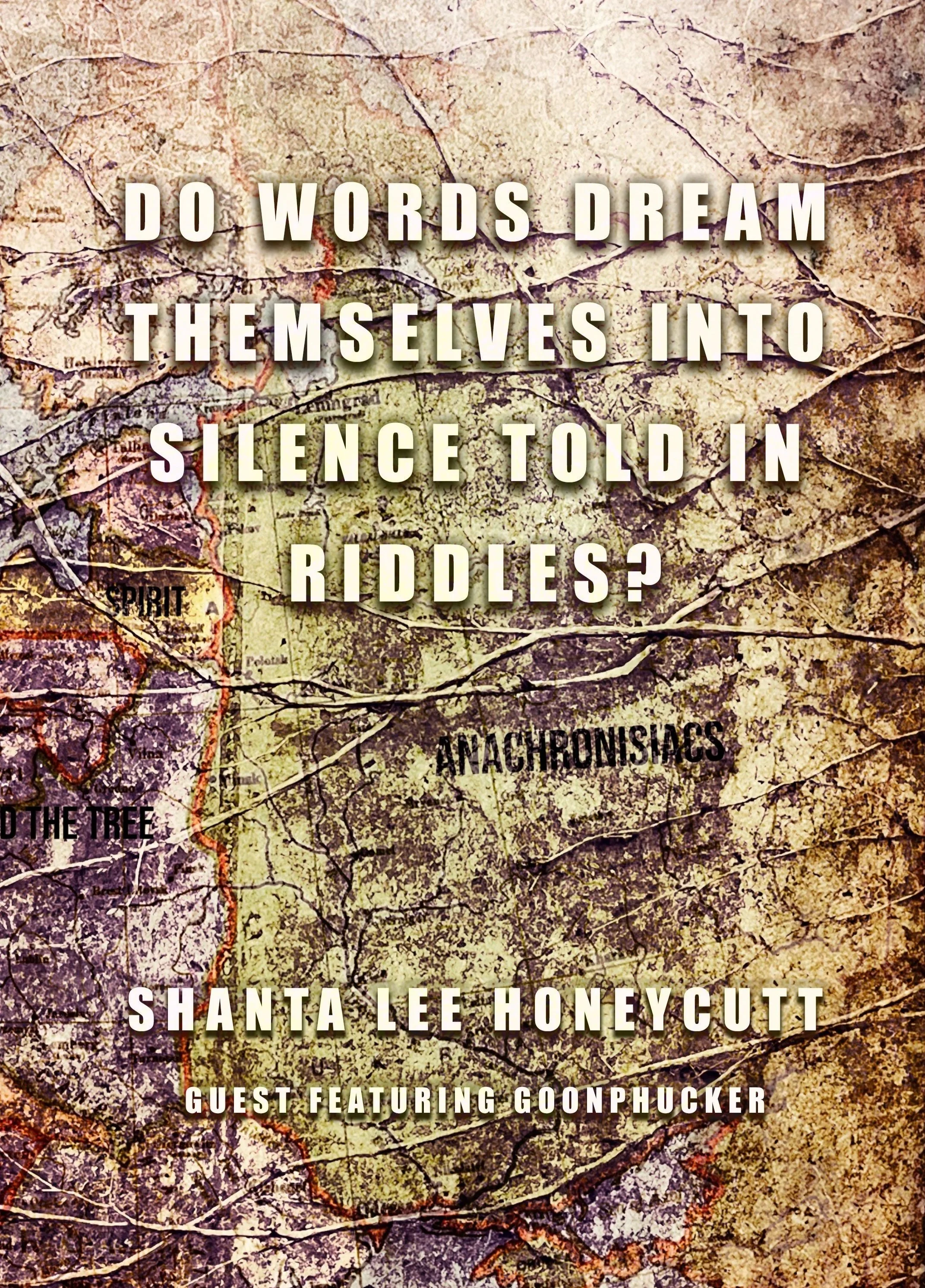
Book description
Do Words Dream Themselves Into Silence Told In Riddles? is a hybrid poetry and prose collection that builds off of its chapbook predecessor, This Is How They Teach You How to Want It...The Slaughter: A Field Guide for the Hunted & the Hunter, The Dead-Alive, The Live-Dead Ones, The.... (Harbor Editions, 2024), by creating a universe of the bizarre, and uncategorizable. Within its pages, readers experience the sisters of an obscure convent and a faceless visitor who demands that the narrator follow the instructions from a childhood friend who says, You have to say yes. You have to be ready when he comes. This collection has a full range reflected in its inspirations that include films like Persona (1966) and Braid (2018); Shirley Jackson’s gift for the subtle uncanny; realities stitched from dreams; and art across different movements, especially the surrealists.
This collection seeks to pose existential questions such as:
Where are we going within the real and imagined external and internal landscapes and do we ever get there? How do we make sense of the interstitial spaces of our bodies, consciousness, and time?
Readers are taken in and out of different worlds while having a choice to navigate the pages in any order they wish.
Readers also meet a surprise concierge who is along for the whole ride.
Are you ready?
Radically imagined but equally committed to the truth of the world we live in now, Do Words Dream Themselves into Silence Told in Riddles? aims to awaken readers to the dangers that engulf them, sometimes even from inside their own minds. When “anywhere is the scene of a crime” and guardian angels have stopped protecting and just sit back and watch our earthly mayhem unfold, we need an ear as exacting and a heart as vigilant at Lee’s looking out for us. But more than just a manual for living in a body among other bodies (potential suspects?) in space and time, this book is a dazzling testament to what words can do and what the page can contain when taken to the limit. “What was it about edges & the way we courted them,” Lee asks, but her art already knows—it’s at the precipice that we feel closest to annihilation, but also most alive.
—Timothy Donnelly
Shanta Lee is a surfer of language’s waves, a wide-winged hoverer on its updrafts and currents. There is a deep, mesmerizing ease in the shifts of genre and tone that drive this restless, encyclopedic book from lyrical ballad to prose travelogue, erasure poetry to spiritual bildungsroman. All the while, Lee’s superb ear for language rhythm, her judicious storytelling, and her chameleonic skill with registers of diction sustain this verdant, ambitious imaginative ecosystem—and sustain us within and through it.
—Annie Finch
Shanta Lee’s poems are possessed and hard to put down. This hybrid experimental collection truly contains multitudes – blended genres, surreal and nested stories, erasure poems, manifestos, guidelines about how to read this book, etc, etc. As the narrator weaves in the allusions to such films as Braid & Westworld, she also investigates dark sides of religion by creating “Order of Mother Mia of the Sisters of She of Feral Souls, She Thangs and…” These texts & poetic narratives brim with dark eroticism, longing, brilliance and – yes –demons, but also guardian angels who exclaim: “Ohhh, this shit’s too good. Imma let’em.” This collection is a challenging maze; it will disorient & taunt you with questions like: “How far does the shadow of the asylum stretch, covering our bodies?”
Just as in Einstein’s relativity theory and Cubist as well as Futurists paintings, which conveyed the inseparability of space and time, all frames of reference in these texts are simultaneous and relative. That’s why I would call Lee’s book an open text, which cannot be processed only in a sequence, but all at once. We are in a labyrinth where many facets transpire all at once. Lee writes: “It’s a 21st century Duchamp whose descended staircase is titled, Degradation of the Nude.” Her work just like Marcel Duchamp’s famous painting “Nude Descending a Staircase, No. 2” (1912) is inviting us to perceive a text from various angles and walk 180° around it. How is the brain able to synthesize those multifarious impressions into a simultaneous vision? Shanta Lee dares us to try.
—Ewa Chrusciel
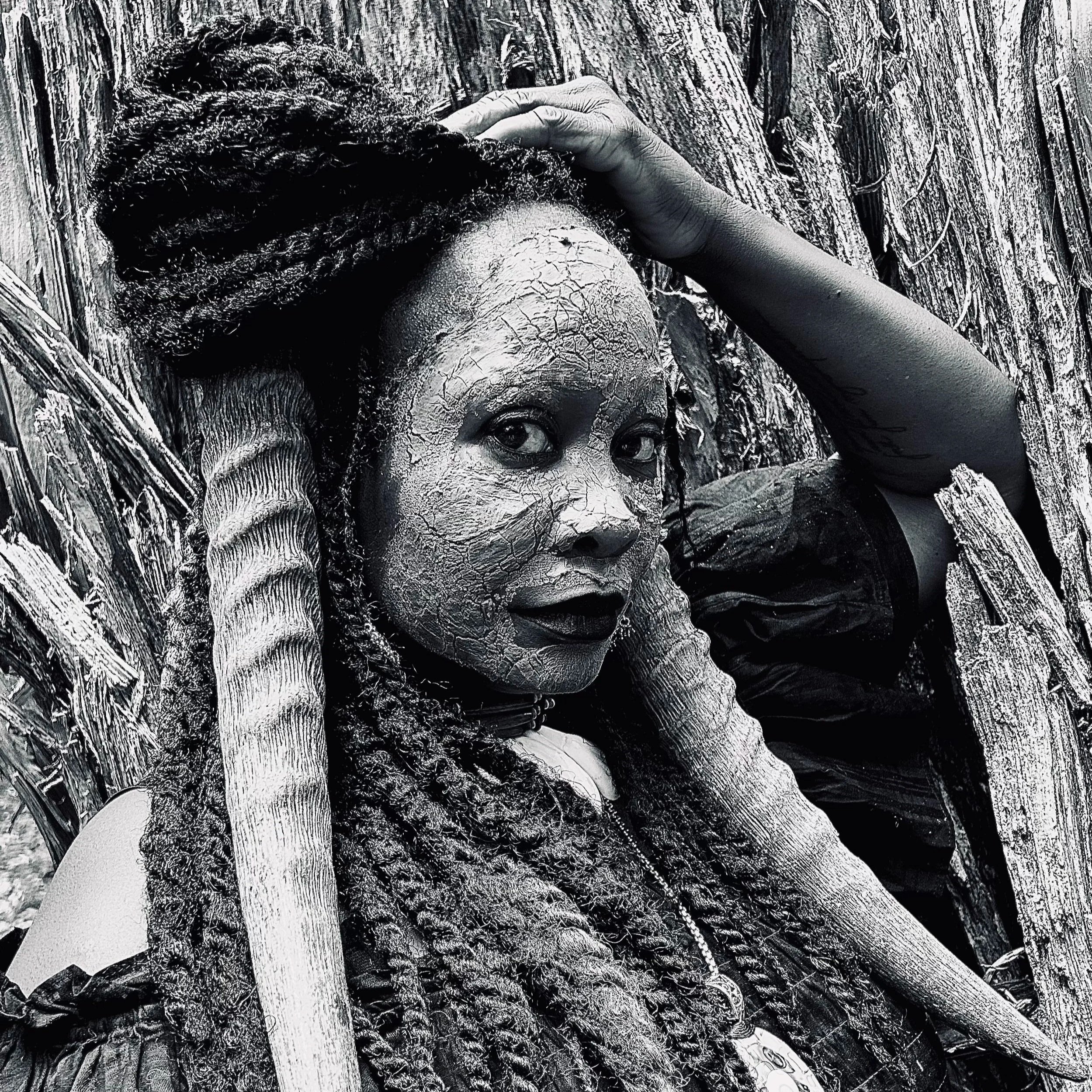
Shanta Lee Honeycutt is an award-winning visual artist, writer across genres, author, and public intellectual who often says she is a “…practitioner of entanglement” for all of the ways she brings things together in her work. Winner of the New England Poetry Club’s Grant for Poetic Achievement, Abel Meeropol Social Justice Writing Award, and a 2024-25 National Arts Strategies Creative Community Fellow (New England), her work has been widely featured in Harper’s Magazine, The Massachusetts Review, ITERANT Literary Magazine, Palette Poetry, Prism, Ms. Magazine, and DAME Magazine, alongside of her former radio segment she created, produced, and reported for Vermont Public.
Shanta Lee Honeycutt’s previous books include: Co-Editor with Philip Brady of the anthology, Sign & Breath: Voice and the Literary Tradition (Etruscan Press, 2025); A double volume of two chapbooks, Close Is... and Hopscotch Between the Living and the Dead (Diode Editions, 2024); This Is How They Teach You How to Want It...The Slaughter: A Field Guide for the Hunted & the Hunter, The Dead-Alive, The Live-Dead Ones, The... (Harbor Editions, 2024); Black Metamorphoses—named a finalist in the 2021 Hudson Prize, shortlisted for the 2021 Cowles Poetry Book Prize, and longlisted for the 2021 Idaho Poetry Prize—illustrated by Alan Blackwell (Etruscan Press, 2023); and GHETTOCLAUSTROPHOBIA: Dreamin of Mama While Trying to Speak Woman in Woke Tongues (Diode Editions, 2021), winner of the Vermont Book Award.
Shanta Lee Honeycutt also has a broad professional wingspan — which includes academic mentor programs and a statewide internship program for two different organizations — that stayed in operation for 20+ years long after her tenure. Her 2024-25 National Arts Strategies Creative Community Fellowship culminated in a website, Foodmemorystories.com (launched in late 2025). The site is a digital exhibition — up until late 2027 — that features the stories and art that Honeycut collected regionally, nationally (and some with an international flavor). Honeycutt has an MFA in Creative Non-Fiction and Poetry from Vermont College of Fine Arts, an MBA from University of Hartford, and an undergraduate degree in Women, Gender, and Sexuality from Trinity College. Explore her visual and written work by visiting Shantalee.com.