

Purchase Lithic: A Hyperballad by Caleb Nichols on Amazon!
Synopsis
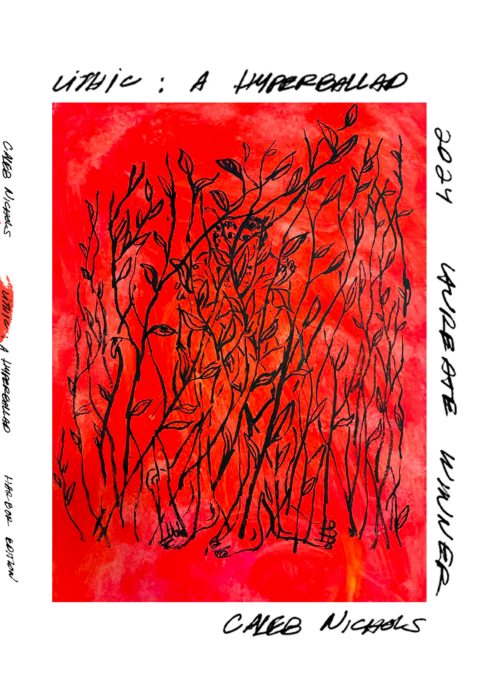
Lithic: A Hyperballad (2026, Harbor Editions Laureate Prize Winner) brings together a sequence of poems and a lyric essay that traverses memory, gender, landscape, and language—excavating a self shaped by place, queerness, ecological disquiet, and artistic lineage. As a work of queer ecopoetics rooted in both lyric and experimental inquiry, Lithic interrogates language, and nature, and digs deep to excavate meaning. The result echoes what Timothy Morton calls a ‘hyperobject’ a concept rooted in the singer Björk’s 1990’s smash hit ‘Hyperballad’: an object, like a relationship, so large that it is perhaps impossible to really comprehend via the standard set of human senses.
The collection was born on the liminal shores of North Wales and the Central Coast of California—two marginal landscapes threaded through by rivers both visible and buried. Throughout the manuscript, Cymraeg (Welsh) language and etymology resonate against Californian punk, eco-trauma, and the plastic shimmer of contemporary collapse. The collection seems to ask: what if the poem is not the artifact but the excavation itself? That is to say, what if the ‘I’ of the poem is actually a process, and not a subjectivity?
Alongside the book, Nichols is releasing a spoken word collection called Stone Age Is Now: Poems From Lithic, on US label Royal Oakie. Across twelve tracks Nichols interpolates poems from Lithic: A Hyperballad with tracks from Stone Age Is Back, bringing new depth to his indie-rock and alt-folk compositions. A meditation on grief, but not in the ways you’d expect, the album explores what it means to be living and dying right now, in this moment of extraordinary change. With a robust history of live musical performances spanning album releases in the 2020’s with iconic US label Kill Rock Stars, and back to the 00’s when Nichols was a member of celebrated neo-folk band Port O’Brien, this fusion of poetry and music feels like a natural culmination of Nichols creative output.
Praise for Lithic: A Hyperballad
Caleb Nichols’ formally restless and inventive poems are “equal parts sex and salvation,” filled with queer desire and bitter sweet elegy for the planet. Nichols searches for an opening through layers of stone into the mutability of awareness, asking not only how we survive but how we are survived. Inspired by and in dialog with the work of many other writers and musicians, Lithic pulls us along into its flow—a cloud-rich and penny-poor “catalog / of wants / a life spent / gathering.” From such a life and despite the world’s violences, the music of these poems rises as a resolute hallelujah.”
—Mira Rosenthal, author of Territorial
What if sound itself is narrative? The sound of the Welsh language, the sound of the river, the remixed sounds of the musics that haunt and bedrock this book, the sounds that are the matter of our lives and the sounds that are inside of us, our perception. In this collection, we're asked to open ourselves "to listen to the hiss of cochlea coiling/ chambers unspooling releasing their crystalline sphinxes". Caleb Nichols’ gift for orchestral and balsamic phrasing is like no-one else.
—Colin Herd, author of Aquafaba
This book is so fresh, so musical and Björk-level playful you will want to dance and weep at the same time. These poems are physical events, undeniable eruptions. Trees pen essays, men become a “thicket of reciprocal moans,” an image roots itself in the sky, and the most alive thought is that which geysers forth from ambling and wending, from two feet meeting the earth again and again. With sacred repetition, dizzying queer desire, and “ancient grief,” Caleb Nichols shows us how to live in a larger reality, one where a “cloud’s shadow” is in fact “more real than the actual cloud.”
—Chen Chen, author of Your Emergency Contact Has Suffered An Emergency
My favorite poems help me realize I only thought I knew this world. Caleb Nichols gives this and so much more—their poetry has a profound human touch. "This dirt belongs in the grooves of my skin / and your clay and my clay are kin". This is a collection of poems for the ages, and I want everyone I know who moves through life with literature to get moving with Caleb Nichols!
—CAConrad, author of First Light
The poems in Lithic gaily cruise, seeking connection— with boys and different bodies, Björk and toads and geese, lichen and yew; a veritable pitch of available pleasures— and luring the reader to become more alive. “What’s the name for that time between inhale and exhale,” Nichols asks, begging at a theme that threads through Lithic: this divine in-betweenness, being both sung out and taken in, subject and object, man and nature, man and not-man—unnamed, still forming, and fabulous.
—T.S. Leonard, author of Another Anthem of Fabulous Survival
There’s a particular historicity in Caleb’s poetry. It’s a here-and-now which resonates with a queer clarity that lands on timelessness. It doesn’t get more relevant.
— Roddy Bottum, author of The Royal We
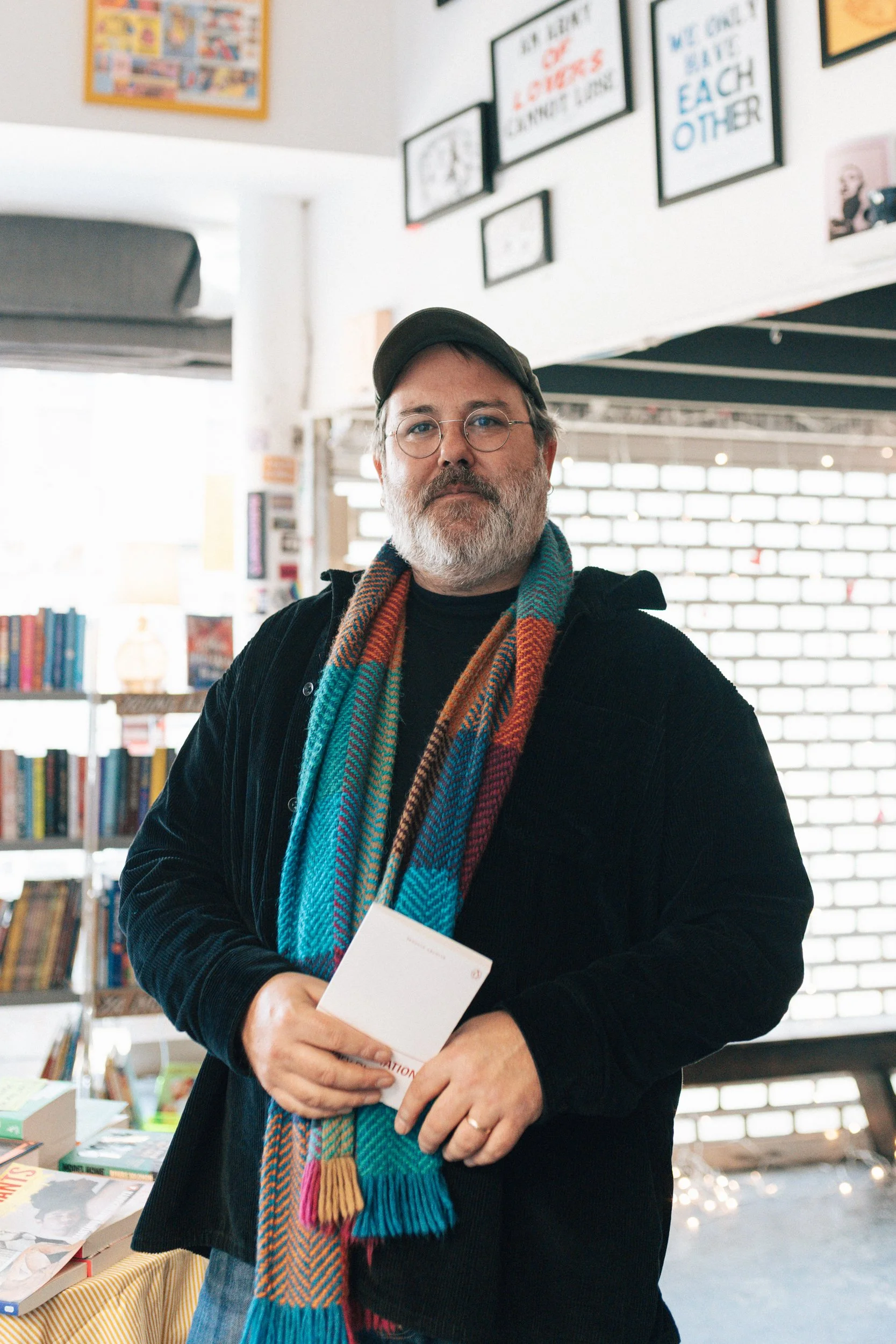
Caleb Nichols is the first queer poet laureate of San Luis Obispo County California. Their poems have appeared in the New England Review, Poetry Wales, and many other places on both sides of the Atlantic. Caleb is the author of Lithic: A Hyperballad, winner of the 2024 Harbor Editions Laureate Prize and the editor of You & i Are Earth: Poems of the Queer Pastoral, published by 14 Poems (forthcoming in 2027). As a musician, Caleb has released albums and eps on iconic indie label Kill Rock Stars. Caleb holds a PhD from Bangor University in North Wales and splits time between Glasgow and San Luis Obispo. More at https://calebnicholis.gay.